Gizmodo’s The Next Interface is a weekly series that explores the exciting—and perplexing—world of wearables in all of its evolving form factors. From fitness bands and smartwatches that track your heart rate to wireless earbuds and headbands that read your brainwaves to smart glasses that shove the internet closer than ever to your eyeballs, we’ll analyze them all with optimism and a healthy dose of skepticism.
For 60 years, Star Trek‘s vision of a future utopia has captured the hearts and minds of audiences—and inspired them to make its far-flung technologies real. From warp speed to transporters, and from medical tricorders to phasers, much of Star Trek‘s technological dreams are still out of human reach. But one enduring piece of kit that inspired the technology that sits in our pockets every day underwent its own technical revolution across the franchise to reach the form we know it in now: the combadge.
Creating Communication
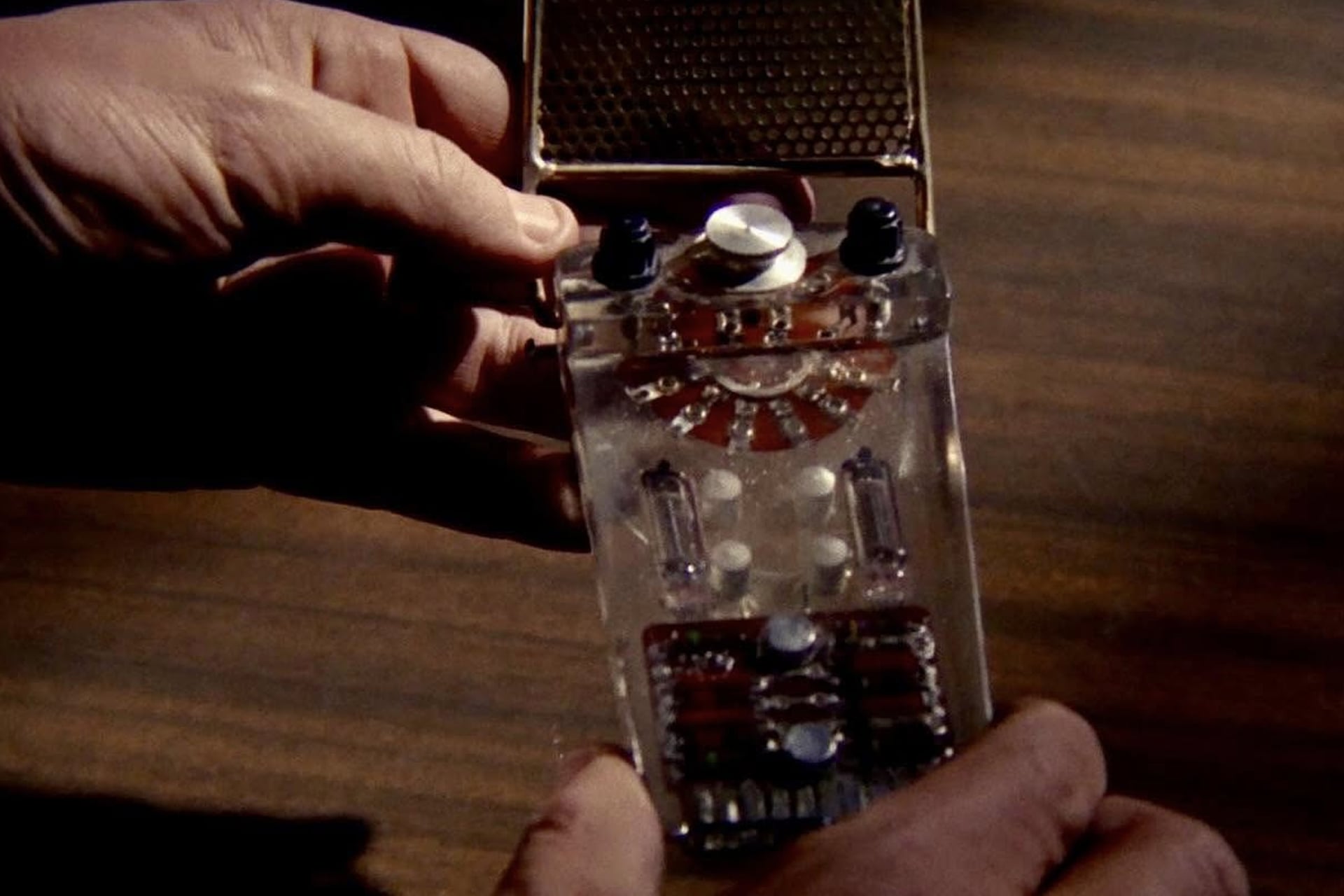
The combadge didn’t start out as such, of course. In the original Star Trek, the communications device was not the wearable tech it would come to be for much of the franchise’s continued history but something more down-to-earth, a handheld flip device. Designed by prop and creature designer Wah Ming Chang for Star Trek‘s pilot episode, “The Cage,” the original communicator underwent an overhaul when Trek actually made it to series: the original device was transparent, exposing the radio transistors and pieces of technology that powered it. When Star Trek became a fully fledged TV series, it was slimmed down slightly and given a black shell that covered that tech and replaced it with a more sci-fi circular spiral display—but it kept the gold flip grill.
But even at the time of the original Star Trek, its creator, Gene Roddenberry, knew that the communicator as it would exist in the show was not entirely as futuristic as it should have been—the idea that in the 23rd century, after centuries of advancement, would realistically still result in a handheld not much smaller than a contemporary walkie-talkie. But Roddenberry felt that audiences still needed to see something usable to make the magical technology of the communicator feel real—rooting its promise of instant communication and even translation across vast distances beyond the corridors of the starship Enterprise in something more tangible than the ship’s own view screens and comm systems.
When Star Trek left TV and returned on the big screen for The Motion Picture, the communicator evolved with the times. Designed for the film by Andrew Probert, it became a wrist-mounted device, starting the technology’s transition to a Star Trek wearable, matching the broader ’70s trend towards miniaturization in technology design. But by that point, as Star Trek had secured its legacy from cancelled TV show to syndication icon, the original communicator device had become too iconic, so future films swapped back to iterations on the now-iconic handheld flip cover.
How Communicators Became Combadges

It would take Star Trek‘s return to TV in The Next Generation to evolve the franchise’s communications devices to the familiar form we see them in for the rest of the franchise. Initial concepting phases for the series struggled with how to approach the new communicator. Series production designer and illustrator Rick Sternbach originally followed in Probert’s steps, envisioning a wrist device, and even considered more out-there alternatives, like a hand-covering device that attached to the wrist and middle finger.
In stark contrast to the transition between the original Trek and its filmic counterparts, another design path saw Sternbach envision even larger, bulkier devices akin to police radios, large strapped packs that would be used in the field alongside wrist devices—but that felt like a step back from the original device and wouldn’t reflect the century leap taken between the original show and TNG‘s setting. After much back and forth, it was allegedly Roddenberry who helped spur the idea of a badge-styled communicator. After considering a series of handheld widgets that bore the Starfleet insignia on them during a production meeting, Rodenberry purportedly said to marry the two, creating a design that would persist not just through TNG but across the next 40 years of Trek.
In-universe, the transition from the communicator to the combadge came with a radical overhaul of its technology, even beyond its integration into the Starfleet uniform. While in the original Star Trek, communicators were largely used by away teams leaving the confines of a starship, the combadge became a Starfleet officer’s point of contact with not just other people on their vessel but the ship’s computer itself, able to request information at a touch. Its transponder systems made it capable of tracking a crewmember’s location at any given time with biometric security details or could be used as a target for transporter systems to lock onto, whether it was the individual badge wearer, larger groups, or even objects within the vicinity of a combadge. In its transition to wearable technology, the combadge became as defining to being a member of Starfleet as the uniform itself. If you left the organization, you turned in your combadge.
The Combadge’s Future, Today

In a similar manner as to how the original Star Trek movies couldn’t escape the communicator becoming an iconic piece of design, as Star Trek has continued to go further and further into the future, it’s become unable to imagine what could be the next technological evolution in communication beyond the iconography of the combadge. If anything, trends in Star Trek have mirrored wearables in our own world; instead of taking on a new design, the combadge has evolved into a multipurpose design that encompasses multiple previous Trek technologies into its form. When Discovery and its successor series Starfleet Academy moved its setting to the currently furthest-flung point in Star Trek‘s timeline, they introduced the “tricom” badge, which miniaturized the combadge, tricorder, and an individual holographic reader display into a single wearable unit operated by hand gestures, further individualizing it by making it capable of functioning even without the use of a ship’s onboard computer.
If anything, however, that’s a reflection on the way our modern technology works after years of consumer technology taking inspiration from Star Trek. The mobile phone as it was first envisioned was in part inspired by the classic Star Trek communicator, even right down to the flip-phone trend being evocative of its clamshell design. Their advancement into smartphones matched the combadge’s own evolution as immediate user access to a supercomputer on their person, as have voice-activated computing assistants like Siri (even if the latter removes the need for a physical interaction like tapping a combadge). Although they’ve yet to really take off in comparison, technology like Humane’s Ai Pin is also meant to directly evoke the combadge, a physical device that can provide assistance, translation, and other features at the press of a wearable button.
Warp speed and near-instantaneous transport might still be well out of our reach, but from years of pop culture influence, one of Star Trek‘s most enduring pieces of technology is basically in our hands already.